
JDM Wheel Fitment Guide: Bolt Patterns, Offset and Hub Bore by Chassis
Share
Before you order wheels for a JDM chassis, three numbers have to match: bolt pattern, offset and centre bore. Get the bolt pattern wrong and the wheel will not go on at all. Get the centre bore wrong and it goes on, but the studs carry load they were never designed to carry. Get the offset wrong and it fits the hub but fouls the strut or sits proud of the arch.
This guide gives the factory specifications for the platforms we stock, taken from manufacturer service manuals and owner's manuals rather than from spec aggregators — because the aggregator data for these cars is demonstrably wrong in several places, and we would rather show you our sources than have you order twice.
The Three Traps That Cause Most Wrong Orders
1. The 240SX left the factory in both 4-lug and 5-lug
This is the single most expensive assumption in the S-chassis world. The S14 240SX exists from the factory with both a 4x114.3 and a 5x114.3 hub depending on specification. "240SX = 4-lug" will eventually put a wheel on a shelf that will not bolt to the car. Count the studs on your own hub before you order. It takes ten seconds and it is the only answer that is true for your specific car.
If your 240SX is 4-lug, read this before you shop
Counting four studs settles what fits — but it also puts you in a smaller market. Aftermarket wheel ranges in 4x114.3 are limited across the industry, because most modern designs are produced for 5-lug hubs. That is not a J-Spec limitation; it is where the wheel market went.
Because of that, the common route for S-chassis builders who want real wheel choice is a 5-lug conversion — swapping to 5-lug hubs and axles so the car runs 5x114.3. Once converted, the entire mainstream 5x114.3 catalogue opens up, which is where nearly all current wheel development sits.
Two things worth knowing before you decide:
- Bolt-pattern adapters are not the same thing as a conversion. An adapter changes your effective offset by its own thickness and adds another clamped joint between hub and wheel. Plenty of street cars run them, but for a car that sees track use, a proper hub conversion is the more common recommendation.
- Brakes usually change with the hubs. A 5-lug conversion is typically done alongside a brake upgrade, since the rotors are hub-specific. Budget the two together rather than discovering it halfway.
If your car is already 5-lug — S14 SE, S15, or a converted chassis — you are on 5x114.3 and the fitment figures above apply directly.
2. The FC RX-7 changed hole count mid-generation
Per Mazda's own service manuals, the US-market FC uses a 114.3 mm pitch circle throughout — only the number of holes changes:
- 1986–88: the 14-inch base steel/alloy wheel is a 4-hole wheel; the 15-inch and 16-inch wheels are 5-hole. Both on the same 114.3 mm circle.
- 1989–91: the factory manual lists no 4-hole road wheel at all — the range is 5-hole.
You will see "the FC is 4x114.3" and "the FC is 5x114.3" stated confidently online. Both are wrong as blanket statements. Check the car.
3. US and JDM cars do not share offsets
This one catches people importing wheels or buying "OEM takeoffs" from Japan. The US-market FC RX-7 runs ET40 per Mazda's FSM. JDM FC grades are commonly +50 and +52.5. Same car, same bolt pattern, materially different offset. Confirm which market a wheel came from before assuming it will sit correctly.
Factory Wheel Specifications
Every figure below is from a manufacturer document. Where a specification is not in a factory document, we say so rather than filling the gap.
Nissan Skyline GT-R R32 (BNR32)
- Wheel: 16 x 8JJ aluminium
- Offset: ET30
- Bolt pattern: 114.3 mm x 5
- Centre bore: 66 mm
- Tyre: 225/50R16 92V
- V-Spec 17-inch fitment: 8Jx17 ET30 front / 9Jx17 ET30 rear, 225/50R17 front and 245/45R17 rear — staggered
Source: Nissan Skyline R32 GT-R workshop manual, Wheels and Tires specifications table. Note: an ET45 figure for the 16-inch wheel is widely published by fitment databases and does not match the factory manual. Where an aggregator and a manufacturer workshop manual disagree, we go with the manual.
Nissan Skyline GT-R R33 (BCNR33)
- Wheel: 17 x 9J, ET30, 245/45R17 — square, no stagger
- Bolt pattern: 5 x 114.3
- Centre bore: 66 mm
The R33 offset is not from a Nissan manual — it is corroborated by independent fitment databases and by listings for genuine take-off wheels. Reliable, but not factory-documented.
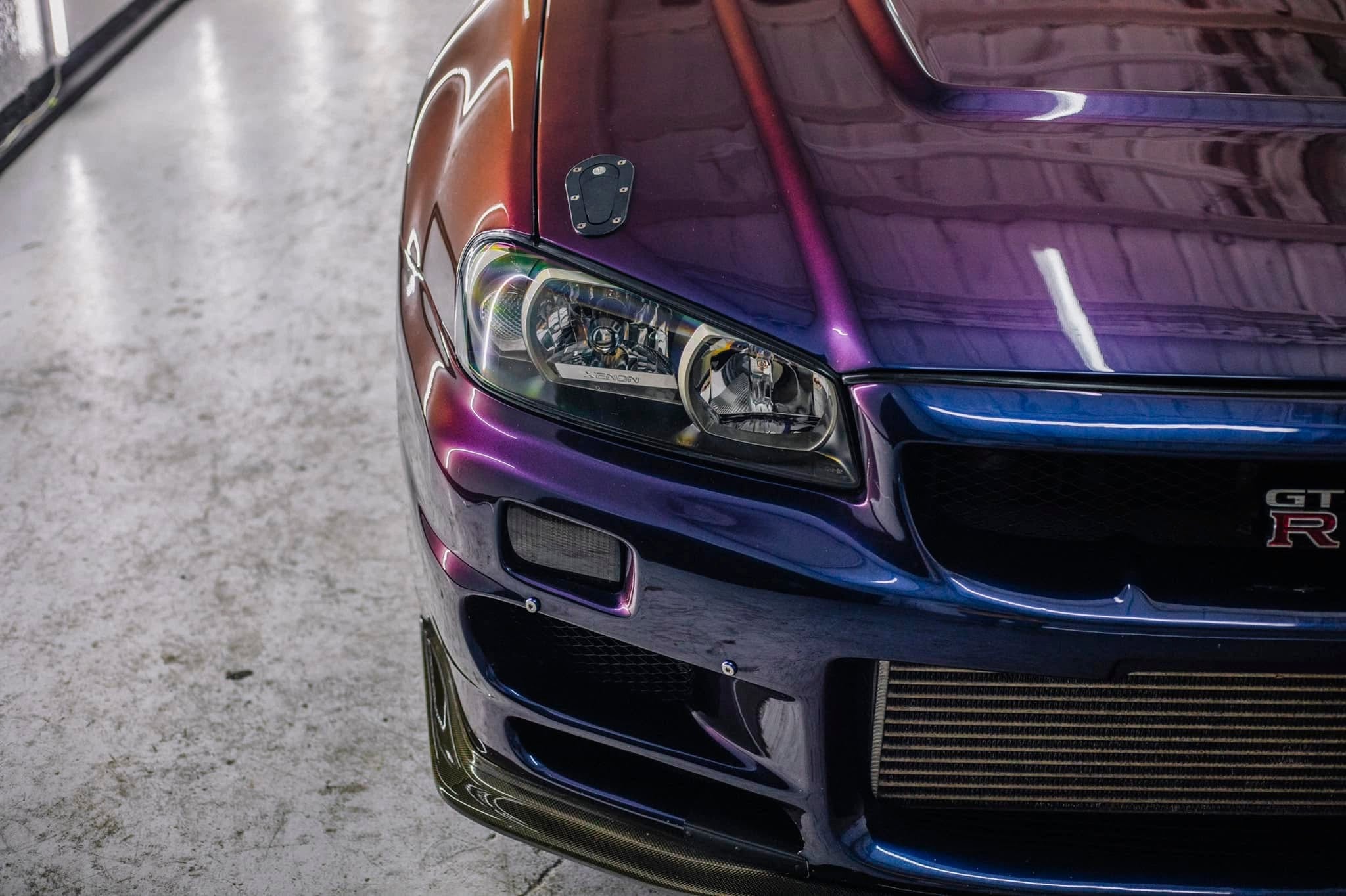
Nissan Skyline GT-R R34 (BNR34)
- Wheel: 18 x 9J, ET30, 245/40R18 — square, no stagger
- Bolt pattern: 5 x 114.3 · Centre bore: 66.1 mm · Thread: M12 x 1.25
The R34 offset is not from a Nissan manual — it is listed as the original fitment by an independent fitment database and corroborated by listings for genuine take-off wheels. A 73.1 mm centre bore figure circulating for the R34 is incorrect; it is 66.1 mm, the same as the R32 and R33.
Nissan GT-R R35
- Front: 20 x 9.5J, ET45, 255/40ZRF20
- Rear: 20 x 10.5J, ET25, 285/35ZRF20 — staggered from the factory
- Bolt pattern: 5 x 114.3, 60° conical seat · Centre bore: 66.1 mm · Thread: M12 x 1.25
- Wheel nut torque: 132 N·m (97 lb-ft)
Source: Nissan GT-R owner's manual, Wheels and Tires. The commonly quoted 98 lb-ft is slightly off.
Nissan 240SX (S13 and S14, US market)
- Wheel: 15 x 6JJ (16 x 6.5JJ optional on S14)
- Offset: ET40
- Tyres: 195/60R15, 205/60R15 or 205/55R16 depending on wheel
- Wheel nut torque: 99–117 N·m (73–86 lb-ft)
- Bolt pattern: 114.3 mm circle — hole count varies, see the warning above
Source: Nissan 240SX factory service manuals. Important: an ET30 figure circulates for the 240SX — in the FSM that number belongs to the 16x4T temporary spare, not the road wheel.
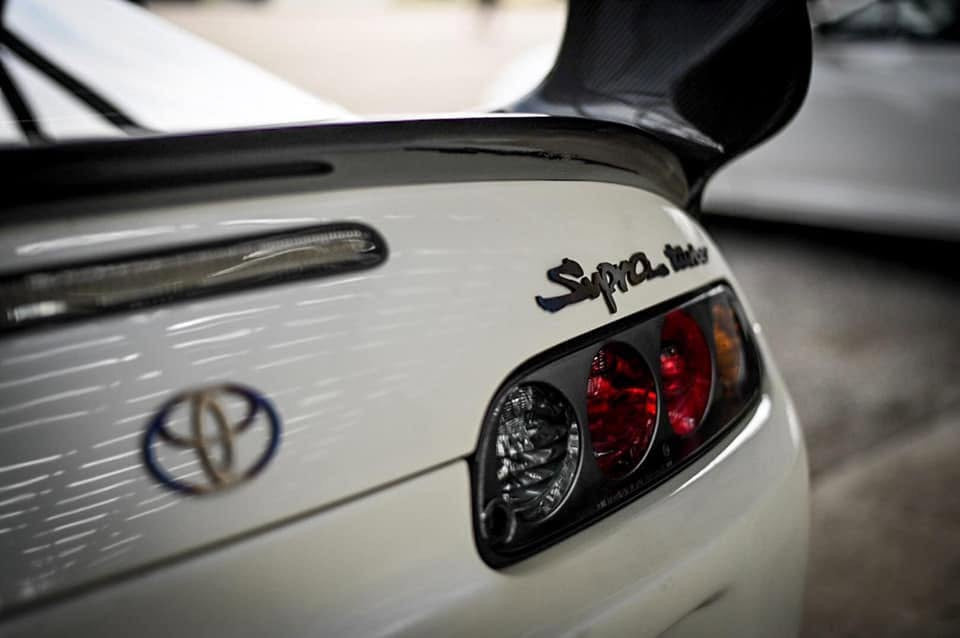
Toyota Supra MK4 (JZA80, US market)
- 2JZ-GE (naturally aspirated): 16 x 8JJ front with 225/50R16, 16 x 9JJ rear with 245/45R16 — staggered from the factory
- 2JZ-GTE (turbo): 17 x 8JJ front with 235/45ZR17, 17 x 9.5JJ rear with 255/40ZR17 — staggered, ET50 front and rear
- Bolt pattern: 5 x 114.3
- Centre bore: 60.1 mm · Thread: M12 x 1.5
- Wheel nut torque: 103 N·m (76 lb-ft)
Source: Toyota Supra owner's manual specifications. Toyota’s owner’s manual gives the rear tyre as 245/45R16; a 245/50R16 size also circulates and does appear in fitment databases, so treat the owner’s manual figure as the OE size rather than assuming the other is simply an error. Toyota does not publish offset in the owner's manual, so the ET50 figure for the 17-inch fitment comes from independent fitment databases and from measurements of genuine take-off wheels, which agree with each other and whose rim widths and tyre sizes match the Toyota manual exactly. The 16-inch fitment is also listed at ET50 across trims and regions by the same databases, so ET50 applies to both the 16-inch and 17-inch wheels.
Mazda RX-7 FC3S (US market)
- 1986–88: 5.5JJ x 14 (4-hole, 185/70R14) · 6JJ x 15 (5-hole, 205/60VR15) · 7JJ x 16 (5-hole, 205/55VR16, turbo model)
- 1989–91: 6JJ x 15, 6.5JJ x 15 and 7JJ x 16 — all 5-hole
- Offset: ET40 across the range
- Pitch circle: 114.3 mm · Thread: M12 x 1.5
Source: Mazda RX-7 factory service manuals, Wheels and Tires specifications. An independent fitment database corroborates the split — it lists the base and SE cars as 4x114.3 and the GTU, GXL and Turbo as 5x114.3, all at ET40. We are deliberately not publishing a centre bore for the FC: two databases disagree (59.6 mm versus 67.1 mm) and Mazda’s manual has no hub-bore column, so measure your own hub. JDM FC grades commonly run +50 or +52.5 — do not apply the US figure globally.
Mazda RX-7 FD3S
- US (1993–95): 16 x 8JJ, ET50, 225/50R16 front and rear — square, no factory stagger
- 17-inch: 8J front / 8.5J rear at ET50 is documented as a factory fitment on certain late JDM grades by Japanese grade-level sources; general fitment databases list 17-inch only as an optional upgrade size, so confirm against the specific grade
- Bolt pattern: 5 x 114.3 · Centre bore: 67.1 mm · Thread: M12 x 1.5
- Wheel nut torque: 89–117 N·m (66–86 lb-ft)
Source: Mazda RX-7 FD3S factory service manuals. 18-inch is not an OEM fitment on the FD in any specification — independently confirmed: the only fitment flagged as original equipment is the 16 x 8J ET50 with 225/50R16 — 18-inch figures listed by fitment databases are plus-size options, not factory.
What Offset Actually Does
Offset (marked ET, from the German Einpresstiefe) is the distance from the wheel's mounting face to its centreline. Higher positive offset pulls the wheel inboard toward the suspension; lower or negative offset pushes it outboard toward the arch.
The arithmetic is simple and worth internalising: dropping offset by 10 mm moves the wheel 10 mm outboard, gaining 10 mm of inboard clearance to the strut and spending 10 mm of clearance at the arch. Width changes split the difference — going one inch (25.4 mm) wider at the same offset adds roughly 12.7 mm on each side.
This is why a wheel that is correct for a JDM car can foul on a US car with the same bolt pattern, and why "it fits a 240SX" is not a specification.
Centre Bore: Hub-Centric vs Lug-Centric
Hub-centric means the wheel's centre bore matches the hub diameter, so the hub locates the wheel and carries its weight. Lug-centric means the bore is larger than the hub, so the lug nuts alone centre and support the wheel — which allows the wheel to shift as you torque it and loads the studs in shear instead of clamp.
If a wheel's bore is larger than your hub, hub-centric rings adapt it back. They are inexpensive and they are not optional on a car that will see track use or high load. A wheel bore that is smaller than the hub simply will not seat — do not machine a hub to suit a wheel.
Lug Seat Type: The One That Actually Hurts People
Wheel nuts and the wheel seats they clamp into come in three common types, and they are not interchangeable:
- 60° conical (taper/acorn) — the self-centring type used on the aftermarket wheels for every chassis in this guide.
- Ball / radius seat — a curved seat, largely European OEM.
- Mag / shank — an extended straight shank with a flat washer, used on some older factory alloys.
Mismatching them is genuinely dangerous, and the reason is not obvious: a mismatched nut can thread on fully and read correct on a torque wrench while delivering almost no clamping force, because the seat geometry never mates. A ball seat pulled into a conical wheel also destroys the wheel's seat through point contact. When you change wheels, change to the matching nuts — and re-torque after the first 50–100 miles.
Aftermarket Fitment: What People Actually Run
Factory specifications tell you what the car left the production line with. They do not tell you what will fit once you are shopping aftermarket wheels — which is usually the real question. Those are two different data sets, and mixing them is how people end up with a wheel that is technically "correct" and still rubs.
For the MK4 Supra, the aftermarket envelope documented across real, photographed builds runs roughly:
- Diameter: 16 to 20 inches
- Width: 8 to 10 inches
- Offset: roughly +25 to +50
Some patterns worth understanding before you order:
- Square setups are common even though the car is factory staggered. The MK4 left the factory with a narrower front and wider rear, but plenty of builds run the same size at all four corners, particularly on 18s. That is a choice, not an error — it changes handling balance and tyre cost, and it is worth deciding deliberately.
- Lower offset means more fender work. Builds in the mid-range of that envelope tend to sit near flush with no modification. Push into the aggressive end — single-digit to low-20s offset on a wide wheel — and rolled fenders, removed inner liners, and adjustable camber and toe arms start appearing as requirements rather than options.
- Spacers change effective offset, and you must do the arithmetic. A 3 mm spacer behind a +34 wheel behaves like a +31 wheel. Spacers are a legitimate fine-tuning tool, but they also move the wheel away from the hub, so hub-centricity and adequate stud engagement both matter more once they are fitted.
- Tyre choice moves the goalposts. Two cars with identical wheel specs can behave differently on different tyre widths and profiles, because the sidewall is what actually contacts the arch. A fitment that works on a 245 may not work on a 275.
- Ride height changes everything. The same wheel and tyre that clears at factory height can foul once the car is on coilovers, because the arch moves through a different part of the tyre's arc.
Treat community build data as evidence, not as a guarantee. A documented build proves that a combination worked on that car, at that ride height, with those tyres and that camber. It does not promise the same result on yours. Use it to narrow the range, then confirm against your own car using the checklist below.
How to Confirm Your Own Fitment
- Count the studs. Four or five. This alone resolves the 240SX and FC RX-7 traps above.
- Confirm the pitch circle. Every chassis in this guide uses a 114.3 mm circle; the hole count is what varies.
- Measure the hub diameter where the wheel seats, and compare it to the wheel's bore. Order hub rings if the wheel bore is larger.
- Check the offset stamped on the wheel (usually ET followed by a number on the spoke face or barrel) and compare it to the factory figure for your car and market.
- Match the lug seat type to the wheel, not to what is already on the car.
- Torque to the factory figure and re-check after the first drive.
Frequently Asked Questions
What bolt pattern is a Nissan 240SX?
The 240SX uses a 114.3 mm pitch circle, but the hole count is not consistent across the range. The S14 left the factory in both 4x114.3 and 5x114.3 depending on specification. Because of that, the only reliable answer for your specific car is to count the studs on the hub before ordering wheels.
What wheels fit a 4-lug 240SX?
A 4-lug S13 or S14 uses 4x114.3, and aftermarket choice in that pattern is limited across the whole industry because most modern wheels are made for 5-lug hubs. Many S-chassis builders therefore convert to 5-lug hubs and axles, which puts the car on 5x114.3 and opens up the mainstream wheel catalogue. Bolt-pattern adapters are an alternative but they change effective offset and add another clamped joint, so a hub conversion is more commonly recommended for cars that see track use. Brake rotors are hub-specific, so a conversion is usually budgeted alongside a brake upgrade.
What bolt pattern is a Mazda RX-7 FC?
The US-market FC RX-7 uses a 114.3 mm pitch circle throughout, with the hole count varying by wheel size and year. For 1986 to 1988 the 14-inch wheel is a 4-hole wheel while the 15-inch and 16-inch wheels are 5-hole. For 1989 to 1991 Mazda's factory service manual lists no 4-hole road wheel at all. Claims that the FC is uniformly 4-lug or uniformly 5-lug are both incorrect.
What is the factory offset of an R32 Skyline GT-R?
ET30 on the factory 16 x 8JJ aluminium wheel, with a 114.3 mm by 5 bolt pattern, a 66 mm centre bore and a 225/50R16 tyre, according to the Nissan workshop manual specifications table. An ET45 figure is widely published for this car and does not match the factory document.
Is the Toyota Supra MK4 staggered from the factory?
Yes, in both engine specifications on the US market. The naturally aspirated 2JZ-GE runs 16 x 8JJ front with 225/50R16 and 16 x 9JJ rear with 245/45R16. The turbo 2JZ-GTE runs 17 x 8JJ front with 235/45ZR17 and 17 x 9.5JJ rear with 255/40ZR17, at ET50 front and rear. Wheel nut torque is 103 Newton metres, or 76 pound-feet.
Did the RX-7 FD3S come with 18-inch wheels from the factory?
No. Eighteen-inch wheels are not an OEM fitment on the FD3S in any specification. The US car uses a 16 x 8JJ wheel at ET50 with 225/50R16 front and rear, with no factory stagger. Certain late JDM grades use a 17 x 8J front and 17 x 8.5J rear at ET50. Eighteen-inch figures shown by fitment databases are plus-size options rather than factory specifications.
What aftermarket wheel sizes fit a MK4 Supra?
Across documented real-world builds the MK4 Supra generally runs 16 to 20 inch diameters, 8 to 10 inch widths, and offsets in the region of plus 25 to plus 50. Setups in the middle of that range typically sit close to flush without modification, while more aggressive low-offset and wide combinations usually require rolled fenders, and sometimes inner liner removal and adjustable camber and toe arms. Ride height, tyre width and spacers all shift the outcome, so treat published build specs as evidence of what has worked rather than a guarantee for your car.
What is the difference between hub-centric and lug-centric fitment?
Hub-centric means the wheel's centre bore matches the hub, so the hub locates the wheel and carries its weight. Lug-centric means the bore is oversized and the lug nuts alone centre and support the wheel, which allows movement during torquing and loads the studs in shear rather than clamp. Hub-centric rings adapt an oversized bore back to the hub and are inexpensive.
Why does lug nut seat type matter?
Because a mismatched nut can thread on fully and read correct on a torque wrench while delivering almost no clamping force, since the seat geometry never mates properly. A ball seat pulled into a conical wheel seat also damages the wheel through point contact. Match the nut type to the wheel and re-torque after the first 50 to 100 miles.
Do JDM and US market cars use the same wheel offsets?
Not always. The US-market FC RX-7 runs ET40 according to Mazda's factory service manual, while JDM FC grades commonly run plus 50 or plus 52.5. The bolt pattern is the same, so a JDM wheel will bolt on but sit differently. Confirm which market a wheel was originally fitted to before assuming it will clear your suspension and arches.
Shop Wheels and Fitment Hardware
J-Spec Garage stocks wheels plus the spacers, PCD adapters, hub-centric rings and extended studs that go with them for these platforms, with fast US shipping and a price match guarantee. If you are unsure about a fitment, send us your chassis code, stud count and current wheel specification and we will confirm before you order.
Browse the Wheels Collection, or go straight to your platform: Nissan 240SX / Silvia, Mazda RX-7, Toyota Supra, Nissan Skyline and Nissan GT-R R35.
A note on sourcing: the specifications above come from manufacturer service manuals and owner's manuals. Where a figure is not in a factory document we say so, and where we could not corroborate one at all — currently only the FC3S centre bore, where two databases disagree — we have left it out rather than repeat a number we cannot stand behind. Specifications also vary by market and by grade, and wheels are frequently changed over a car's life. Always verify against your own car before ordering.