
Mazda RX-7 FD3S: History, Specs & Why Rotary Culture Never Died
Share
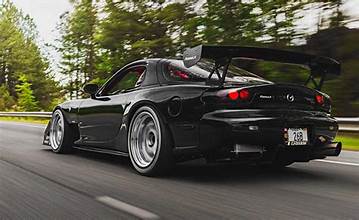
There are sports cars, and then there is the FD3S. The third-generation Mazda RX-7 is one of those rare machines that occupies a different mental category from everything else on the road — not because of horsepower numbers or quarter-mile times, but because of what it is. A twin-turbocharged rotary engine in a near-perfect 50/50 front-mid layout, wrapped in bodywork that still looks forward even 30 years later.
Production ran from 1992 to 2002 in Japan, with the US market receiving cars from 1993–1995. The FD3S was not just a fast car. It was a statement: that Mazda believed in the Wankel rotary engine when nobody else did, and that they were willing to engineer around its limitations rather than abandon it. That belief created a community — builders, tuners, and enthusiasts who refuse to let the rotary die — still very much alive today.
History and Why the FD3S Is Legendary
Mazda introduced the FD3S at the 1991 Tokyo Motor Show, going on sale in Japan in late 1991 as a 1992 model. The design was a departure from the angular FC3S: smooth, low, and purposeful. Wind tunnel sessions at Mazda's facilities produced a drag coefficient of 0.29 Cd — exceptional for 1992 and better than most sports cars produced in the following decade.
The suspension was fully independent front and rear with sophisticated geometry that made the FD one of the best-handling cars of its era by any metric. Road & Track, Car and Driver, and virtually every contemporary automotive publication put it in the conversation with the best sports cars in the world — at a fraction of the price.
Production ended in Japan in 2002. Mazda built approximately 68,000 FD3S examples over the car's production run. For a car with this kind of performance legacy, that is a remarkably small number — and it is part of why the FD3S community invests so heavily in keeping these cars alive.
The 13B-REW Engine: Twin-Rotor Twin-Turbo
The heart of the FD3S is the 13B-REW — a 1.3-liter twin-rotor Wankel rotary engine with a sequential twin-turbo system. The displacement number is misleading; the 13B-REW's thermodynamic cycle and power density behave nothing like a conventional piston engine of similar displacement.
Factory specifications (Series 8 / final generation):
- Engine: 13B-REW twin-rotor sequential twin-turbo
- Displacement: 1,308cc
- Power: 280ps (276hp) at the crank — the Japanese Gentlemen's Agreement limit
- Torque: 314 Nm (231 lb-ft)
- Redline: 8,000 RPM
- Compression ratio: 9.0:1
- Turbo system: Primary (low-speed) + secondary (high-speed) sequential layout
The sequential turbo system is both the 13B-REW's most impressive feature and its most temperamental. Below approximately 4,500 RPM, only the primary turbo is active. As RPM climbs, the secondary turbo comes online, producing the characteristic surge that FD owners describe as the car waking up. Managing this transition reliably is one of the core priorities of a good FD build.
The Best Performance Upgrades for the FD RX-7
The FD3S responds well to forced induction upgrades, fueling upgrades, and supporting modifications — but the rotary engine rewards a different approach than a piston engine. The 13B-REW has no connecting rods to bend and no valves to float, but it has apex seals, oil metering systems, and a cooling architecture that demands respect.
Single Turbo Conversion
The most popular power upgrade is eliminating the factory sequential twin-turbo system in favor of a single, larger turbo. The sequential system is reliable when healthy, but aging FD3S examples often have worn turbos, cracked housings, and failing solenoids. A quality single-turbo kit resolves all of that and makes the power delivery linear rather than step-like.
Popular single-turbo choices include the BorgWarner EFR 7670/8374 and Garrett G25/G30 series depending on the power target. A quality single-turbo setup on a refreshed 13B-REW will support 400–500whp reliably on pump 93 or E85. Visit our FD RX-7 engine parts collection for supporting hardware.
Fuel System Upgrades
The factory fuel system works fine at stock power levels. The moment you exceed 350whp or switch to E85, you need injector upgrades, a higher-flow fuel pump, and typically a return-style fuel rail. Injector Dynamics injectors for RX-7 applications — including the ID1300 direct-fit for the 93-95 FD3S — are stocked at J-Spec Garage.
Oil System: Where RaceOnly Changes Everything
The 13B-REW's oil system is one of the most important — and most often overlooked — aspects of a serious FD build. The rotary engine uses oil for apex seal lubrication via the metering pump, and oil cooling is critical to long engine life.
RaceOnly's billet FD RX-7 oil system components are the industry standard for built rotary engines. Their billet oil filter pedestal, oil return, power steering reservoir, and more are precision-machined upgrades that eliminate the weak points of the factory oil system. J-Spec Garage is the only authorized US distributor of RaceOnly products — if you're building a serious FD, this is where you source these parts.
ECU and Engine Management
Any modified FD3S beyond bolt-on upgrades needs a standalone ECU. The factory ECU is not reflashable in any meaningful way and does not support the flexibility needed for a single-turbo conversion or aggressive fueling changes. Haltech, ECUMaster, and AEM all make 13B-REW-specific plug-and-play or universal solutions that are widely supported by experienced rotary tuners.
Apex Seals and Porting
Before any power adder goes on an FD3S with unknown history, assess the apex seals. A compression and leakdown test specific to the rotary engine tells you whether the rotor housings are in good shape. A refreshed engine with new apex seals is the correct foundation for a high-powered build.
Street Build vs. Track Build: What Changes
Street FD3S build: Refreshed 13B-REW with new apex seals, a single-turbo kit at moderate boost (12–15 PSI), E85-capable fuel system, quality standalone ECU, RaceOnly oil system upgrades, and a tune targeting 400–450whp.
Track/time attack FD3S build: Built engine with ported housings, race-spec apex seals, large single turbo, high-flow injectors, aggressive E85 or methanol tune, coilover suspension, and an aero package. Power targets in the 500–600whp range are common; 700whp+ is possible with a stroked 20B conversion.
Frequently Asked Questions
Is the FD RX-7 reliable?
A well-maintained FD3S with a fresh engine and proper oil system is a reliable car. The reliability concerns come from deferred maintenance, aging components, and the rotary's sensitivity to overheating. Address the oil system, keep coolant temps in check, and service the car on a proper schedule and you will have a dependable machine.
How much does it cost to build a fast FD3S?
A solid street build targeting 400whp on E85 — engine refresh, single-turbo kit, fuel system, ECU, and tune — typically runs $15,000–$25,000 in parts and labor depending on the starting condition of the engine. A serious track build with aero and a fully built motor can approach $40,000–60,000 all-in.
What years of FD RX-7 are best?
Japanese-spec Series 6 (1995–1996) and Series 8 (1999–2002) are generally considered the best. The Series 8 received revised suspension tuning, upgraded Bilstein dampers, and minor engine improvements. US market FD3S cars (1993–1995) are plentiful and make excellent build candidates.
Can the 13B-REW make 500whp reliably?
Yes, on a properly built and tuned engine. 500whp on E85 with a single turbo and a well-managed oil and cooling system is a proven setup in the FD community. Beyond 550–600whp, apex seal longevity starts to become a significant variable, and most builders in that range use race-grade seals and plan for more frequent engine inspections.
Shop FD RX-7 Parts at J-Spec Garage
J-Spec Garage carries one of the most comprehensive FD RX-7 parts catalogs in the US, including the complete line of RaceOnly billet rotary components — parts you cannot legally purchase from any other US retailer. From apex seals to engine management to oil system upgrades, we stock what the FD community actually needs to build these cars right.
Shop the complete Mazda RX-7 FD3S parts collection at J-Spec Garage